cat-corner
How to Stop a Cat From Scratching Furniture (Without Declawing)
By the wagmello team 7 min read
If you're searching for how to stop cat scratching furniture, the first thing to understand is this: your cat isn't being spiteful, and it's not a behavior problem you can punish away. Scratching is a normal, healthy, hardwired feline behavior. Cats scratch to shed the dead outer sheaths of their claws, to stretch the muscles of their shoulders and back, and, most importantly, to mark territory. Their paws have scent glands, so a clawed-up couch arm is partly a visual signal and partly a scent signpost that says "this is mine."
That's why declawing is the wrong answer. Declawing (onychectomy) isn't a nail trim. It's the surgical amputation of the last bone of every toe. It's banned in much of Europe and in a growing list of U.S. cities and states, and the leading veterinary bodies oppose it as an elective procedure. Declawed cats are at higher risk of chronic pain, lameness, and litter-box avoidance, and they're more likely to bite, having lost their primary defense. You can solve the furniture problem completely without it. Here's how.
Step 1: Give them something better to scratch
You cannot stop scratching. You can only redirect it. A cat will keep targeting your sofa if the sofa is the best scratching surface in the house. Your job is to make a designated post more appealing than the furniture. Most failed scratching posts fail for the same fixable reasons:
- Too short. A cat wants to scratch at a full stretch. A post needs to be tall enough that your cat can extend completely (roughly 28-36 inches for an adult) and rock-solid so it doesn't wobble. A post that tips mid-scratch teaches your cat to never use it again.
- Wrong material. Most cats strongly prefer rough, shreddable sisal rope or sisal fabric over carpet. Carpeted posts also blur the line: if the post feels like the carpet, why not scratch the carpet?
- Wrong orientation. Watch where your cat scratches now. If they claw the floor or a rug, they're a horizontal scratcher and need a flat cardboard or sisal pad, not a vertical tower. Many cats want both.
- Wrong location. Hiding the post in a spare bedroom defeats the purpose. Put it exactly where the unwanted scratching happens: beside the couch they target, near where they sleep, by the doorway they patrol.
Step 2: Protect the furniture while they learn
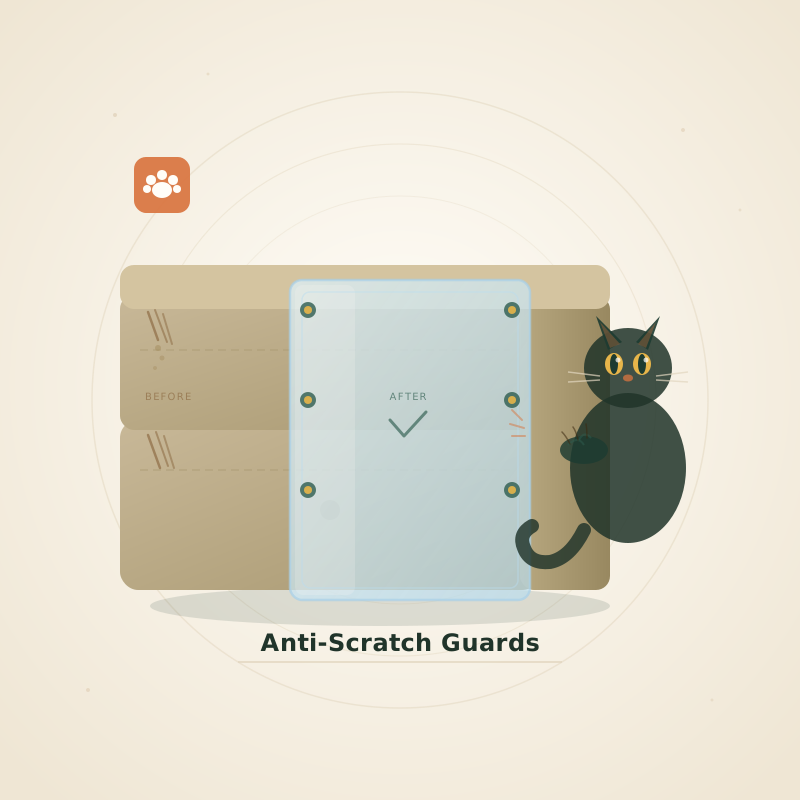
Redirection takes a few weeks, and during that window you need to make the couch boring and unrewarding. The most effective tactic is to change how the targeted surface feels, because cats hate scratching slick or sticky textures. Double-sided tape, a smooth plastic guard, or a fitted cover over the arm of the sofa removes the satisfying drag their claws are chasing. A simple set of clear cat anti-scratch furniture protectors over your couch corners does this without making your living room look like a science experiment, and unlike sprays, they don't wear off after a day. The key is to deploy them at the same time you add the new post, so the message is consistent: this spot is off-limits, that spot is yours.
Skip the punishment-based "deterrents" you'll see recommended elsewhere. Spray bottles, loud noises, and yelling don't teach a cat where to scratch. They just teach the cat to scratch when you're not in the room, and they erode trust. Texture-based deterrents work because they change the environment, not the relationship.
Step 3: Make the new post irresistible
Once the post is in the right spot, reward your cat for using it. Rub a little catnip or silvervine into the sisal, or dangle a toy near the base so their claws naturally catch the surface. The moment they scratch the post (even by accident), give a treat or warm praise. Cats repeat what pays off. Never pick your cat up and force their paws onto the post; that feels like a threat and usually backfires.
Step 4: Burn off the energy behind the scratching
This is the step most owners skip, and it's often the difference between a cat that occasionally tests the couch and a cat that shreds it daily. A lot of destructive scratching is really under-stimulation. Indoor cats are predators with nowhere to hunt, and that pent-up energy comes out somewhere, frequently on your furniture. Cats who get a couple of solid play sessions a day are markedly calmer and less destructive.
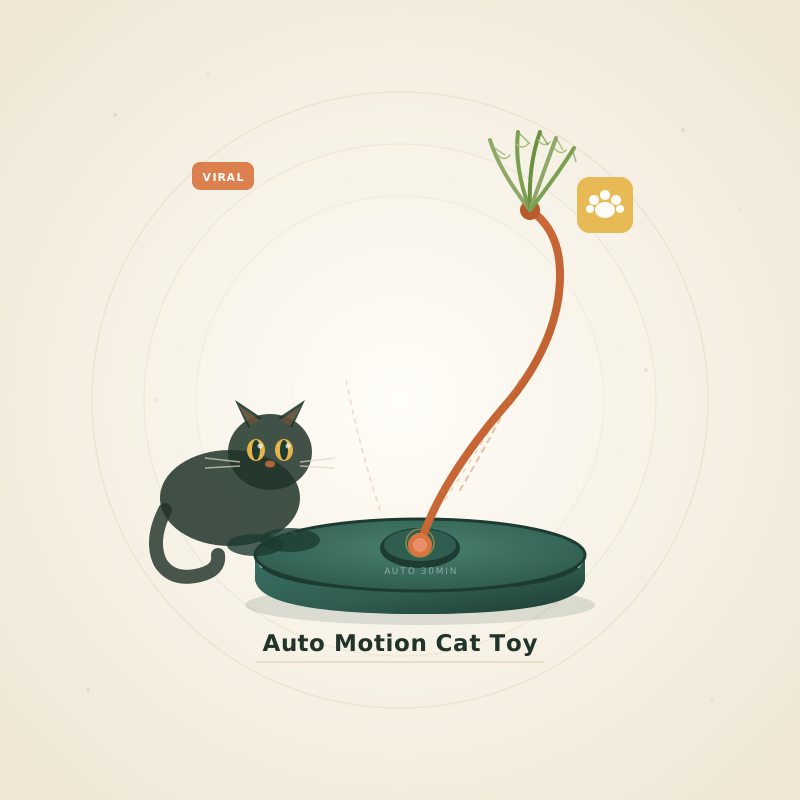
The fix is genuine prey-style play: short, intense bursts that let your cat stalk, chase, pounce, and "catch." Ten focused minutes morning and evening does more than an hour of half-hearted dangling. If your schedule doesn't allow that, an automatic motion cat toy keeps an indoor cat engaged when you're at work or asleep: the unpredictable movement triggers the hunt instinct and drains the energy that would otherwise go into your armrest. Always finish any play session with a "kill" (let them catch the toy) and a small treat, so the hunt feels complete rather than frustrating.
Step 5: Keep their claws trimmed
Trimming doesn't stop scratching, but it dramatically reduces the damage when it does happen, and it keeps claws from snagging carpet and upholstery. Trim every two to three weeks. Press gently on the paw pad to extend the claw, and clip only the clear, sharp tip. Stay well away from the pink "quick," which contains blood vessels and nerves. If your cat won't tolerate it, trim one or two claws per session and pair it with treats. Soft vinyl nail caps (glued over trimmed claws) are another humane, vet-accepted option for cats that scratch despite everything else.
What to do if nothing's working
If you've done all of the above for several weeks and the scratching is intense, sudden, or paired with other changes (spraying, hiding, over-grooming, litter-box accidents), talk to your vet. A spike in scratching can be a stress or anxiety signal (a new pet, a move, a schedule change) rather than a furniture issue, and that needs a different approach, sometimes including pheromone diffusers or a behavior plan.
The bottom line: you don't have to choose between your furniture and your cat's wellbeing, and you never have to consider declawing. Give your cat a tall, sturdy, sisal post in the right spot, make the couch unrewarding with furniture protectors while they learn, drain their predatory energy with daily play, and keep those claws trimmed. Do those four things together and the couch stops being a target, usually within a few weeks.
A quick note: This guide is general pet-care information, not veterinary advice. Every animal is different: if your pet is in distress or you're unsure, call your vet or an emergency animal hospital.