beds-lounging
Why Your Dog Can’t Settle at Night (and the Bed That Fixes It)
By the wagmello team 6 min read
You're lying in bed and you hear it again: the slow scrape of nails on the floor, three or four tight circles, a heavy sigh, and then, two minutes later, the whole routine starts over. Your dog can't settle. By 3 a.m. they've relocated to the cold tile, the hallway, or the foot of your bed. If this sounds familiar, the instinct is to assume your dog is anxious, stubborn, or just "a bad sleeper." Usually, none of those is the real story. The most common reason a healthy dog can't settle at night is that their sleeping surface is working against their biology, and the right calming dog bed solves more of the problem than most owners expect.
What "can't settle" is actually telling you
Dogs are polyphasic sleepers: they cycle through light sleep, deep sleep, and REM many times across the night rather than sleeping in one solid block like we do. A healthy adult dog spends roughly 12 to 14 hours a day asleep, and a meaningful chunk of that happens overnight in short bursts. Every time they surface from a cycle, they make a split-second decision: is this spot still safe and comfortable enough to drop back down? If the answer is no, they get up.
That circling-and-digging ritual before lie-down isn't neurosis. It's an evolutionary holdover from wild canids who trampled grass, checked for threats, and oriented their bodies before committing to sleep. A little of it is normal. But persistent circling, repeated resettling, and migrating to hard floors are signals: your dog is searching for something the current bed isn't giving them. The two things they're almost always looking for are a place to rest their head and a temperature that doesn't betray them mid-cycle.
The four reasons dogs abandon their beds at night
1. No edge to anchor against. Most dogs are instinctive curl-sleepers. In the curl position, nose tucked toward tail, spine rounded, they conserve heat and protect their vital organs, which is precisely the posture a nervous system reads as "safe." A flat mat or pillow gives them nothing to brace against, so the curl never fully locks in. They end up half-curled, slipping, and re-adjusting all night. A raised bolster or rim changes everything: it gives the head and neck a place to rest and gives the curled body a wall to press into.
2. The surface goes cold. Thin beds lose body heat fast. Your dog warms a spot, drifts off, and then in deep sleep their muscles relax and their body temperature dips slightly, and now the surface that felt warm an hour ago feels cool. They wake, they move, they hunt for a warmer spot (which is why so many dogs end up pressed against you). A bed with enough loft and fill to trap and return heat keeps that spot warm through the whole cycle.
3. Joint pressure they can't sleep through. Hips, elbows, and shoulders take the load when a dog lies on a hard or compressed surface. In senior dogs and larger breeds this is often subclinical arthritis you haven't noticed yet: the dog isn't limping during the day, but pressure on those joints is enough to interrupt deep sleep. Repeated repositioning at night is frequently the first visible sign of early joint discomfort. Supportive fill that distributes weight evenly removes that pressure point.
4. The bed is in the wrong place. Dogs are den animals. A bed in the middle of an open room, in a draft, or in a high-traffic walkway keeps the threat-assessment part of their brain mildly switched on. They settle far better in a corner, against a wall, slightly out of the flow, somewhere their back is protected and they can see the door.
Why the bolster (donut) design fixes the most common cases
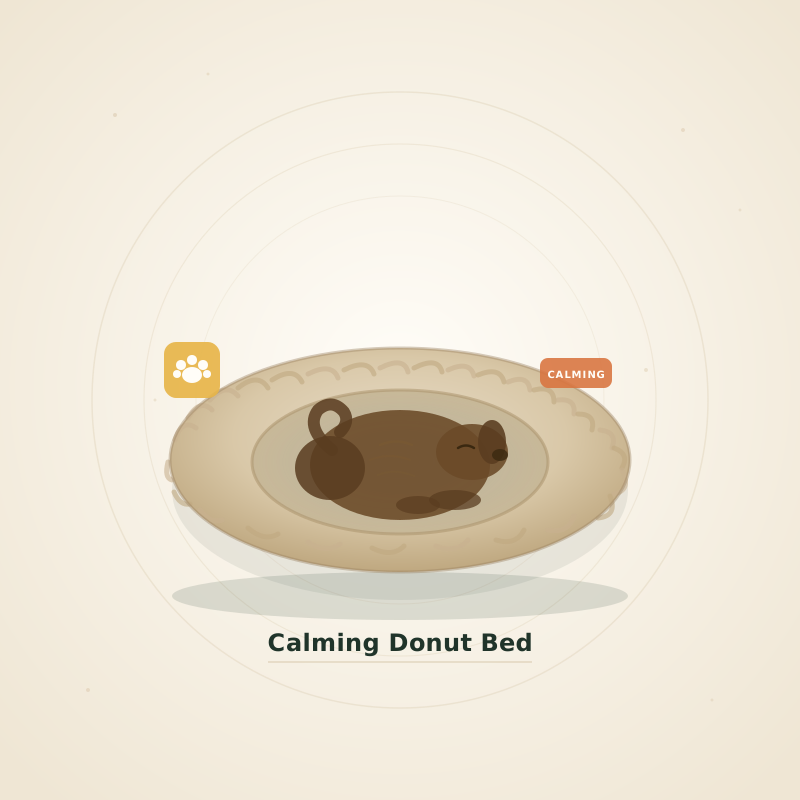
If you map those four problems against bed shapes, one design addresses three of them at once. A round, deep-walled calming donut bed is built around the curl posture rather than fighting it. The raised rim is the headrest dogs are constantly searching for, and the continuous wall gives a curled dog something to press their spine against. That physical contact along the back is the same principle behind anxiety wraps and swaddling. Deep pressure against the body triggers a parasympathetic, "stand-down" response in the nervous system. The dog doesn't just lie in the bed; the bed gently holds them.
The depth matters more than the diameter. A shallow round bed is just a flat bed with a token edge. What settles a restless dog is a rim deep enough that a curled dog is partially enclosed, with a soft, supportive center that doesn't bottom out to the floor and stays warm through a full sleep cycle. The self-warming effect of a filled, walled bed is also why these work especially well for dogs who keep migrating to your bed for body heat: you're giving them a heat-retaining den of their own.
One honest caveat: not every dog is a curler. Some dogs, often deep-chested breeds, very large dogs, and those with stiff joints, prefer to stretch out flat, and forcing them into a donut won't help. If your dog consistently sleeps sprawled on their side with legs extended, a large flat orthopedic surface serves them better. Watch how your dog chooses to sleep when they're comfortable, and buy for that posture. For the majority of small-to-medium dogs and any dog who curls, the bolster shape is the closest match to their instinct.
Set it up so they'll actually use it
A new bed isn't a magic switch: placement and association decide whether it gets used. Put it in a quiet corner against a wall, out of drafts and foot traffic. For the first few nights, lead your dog to it with a treat and reward them for lying down rather than waiting for it to happen on its own. A worn, unwashed t-shirt of yours laid inside transfers your scent and accelerates the "this is my safe place" association dramatically. Size it so your dog can curl comfortably with a little room: too big and the walls are out of reach, too small and they hang over the edge.
When anxiety is clearly part of the picture, meaning your dog is restless because of storms, fireworks, or being left alone and not just the surface, the bed works best as the anchor in a small calming routine. A lick mat with a smear of xylitol-free peanut butter before bed gives the rhythmic licking that measurably lowers cortisol, and a pressure wrap layers the same deep-touch principle onto the body during high-stress nights. The bed gives them the right place; the routine gives them the right state to use it.
When it's not the bed
Upgrade the bed first: it's the highest-yield, lowest-cost change and it resolves the majority of "won't settle" cases. But if your dog is still pacing after a week on a good bolster bed in the right spot, look further. Sudden-onset restlessness, panting at night, increased thirst, signs of pain when rising, or disorientation in older dogs can point to pain, cognitive decline, or a medical issue that no bed will fix. Restlessness that appears overnight in a dog who used to sleep fine deserves a vet visit. For the slow, chronic, "they've never really settled" version, though, the answer is usually simpler, and it's shaped like a donut.
A quick note: This guide is general pet-care information, not veterinary advice. Every animal is different: if your pet is in distress or you're unsure, call your vet or an emergency animal hospital.