travel-safety
Road Trip With a Dog: The Complete Safety & Packing Checklist
By the wagmello team 8 min read
A road trip with a dog is one of the best things you can do with them, and one of the easiest to get wrong. Most owners pack the dog's food and a leash, clip nothing in, and hope for the best. The result is a stressed dog panting in the footwell, a driver reaching back to settle them at 70 mph, and zero plan for the one thing that actually scares vets: what happens if the dog gets loose at a rest stop two states from home.
This is the checklist I'd hand a friend before a long drive. It's built around three things that genuinely change outcomes: restraint, hydration, and identification, plus the small comforts that keep a nervous dog from turning the back seat into a disaster.
Why an unrestrained dog is a real safety problem
An unsecured 50-lb dog in a 30 mph crash hits the seat in front of it with roughly 1,500 lbs of force. That's not a scare statistic. It's basic physics, and it's why crash-test organizations like the Center for Pet Safety test harnesses the same way they test child seats. An unrestrained dog can be killed, can injure a passenger, and can bolt through a broken window into traffic after the impact.
Even with no crash, a loose dog is a documented driving distraction. Several states now ticket drivers for it. The fix isn't complicated: your dog should be physically connected to the vehicle for the entire drive, every drive.
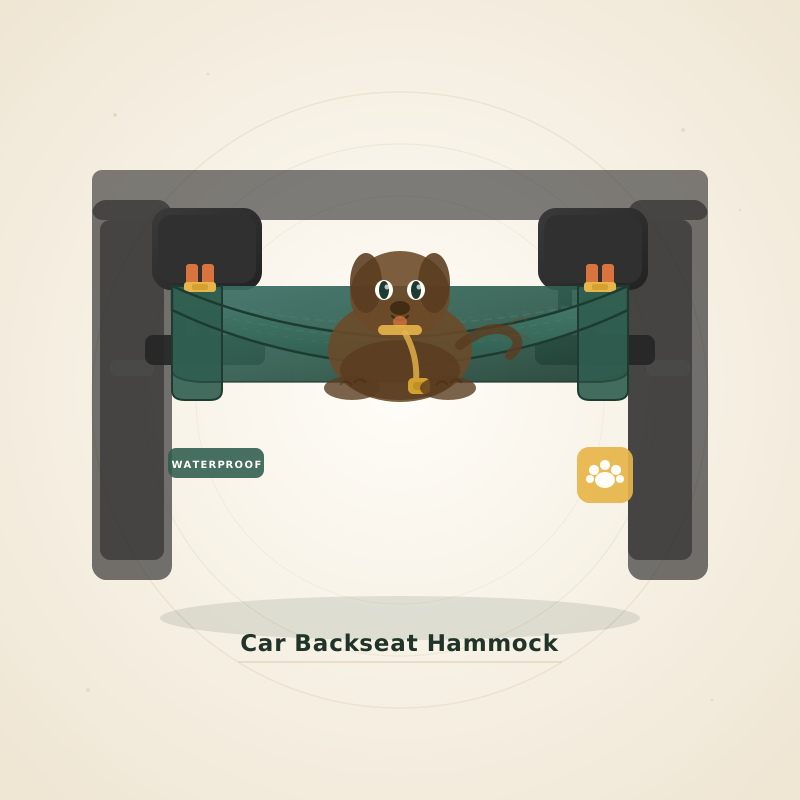
You have two solid options. A crash-tested harness clipped to a seatbelt is the gold standard for one dog. For most owners (especially with more than one dog, a back seat that doubles as luggage space, or a dog that sheds and slides around), a back-seat dog car hammock is the more practical setup. It creates a contained "den" across the rear bench, stops your dog from climbing into the front, protects your seats, and gives an anxious dog a defined space instead of an open cabin to pace in. Pair the hammock with a short tether or harness so the dog can't leap out the second a door opens at a gas station.
The pre-trip vet and prep checklist
- Vet check for trips over a few hours. Confirm vaccinations are current, ask about anything region-specific where you're headed (ticks, heartworm, leptospirosis), and discuss motion sickness if your dog drools or vomits in the car.
- Motion sickness plan. Don't feed a full meal within 3-4 hours of departure. For dogs that reliably get carsick, ask your vet about maropitant (Cerenia), the only drug FDA-approved for dog motion sickness. It's far more effective than human remedies and doesn't sedate them.
- A practice drive. If your dog only rides in the car to go to the vet, the car itself is a trigger. Do two or three short fun drives in the week before (to a park, around the block) so the car predicts good things, not needles.
- Updated ID. This is the step everyone skips and the one that brings dogs home. More on it below.
Hydration and feeding on the road
Dogs dehydrate faster than people in a warm car, and a panting, anxious dog loses more water still. But you can't leave a full water bowl out in a moving vehicle. It sloshes everywhere and most dogs won't drink while the car's moving anyway. The answer is structured water breaks every 2-3 hours.
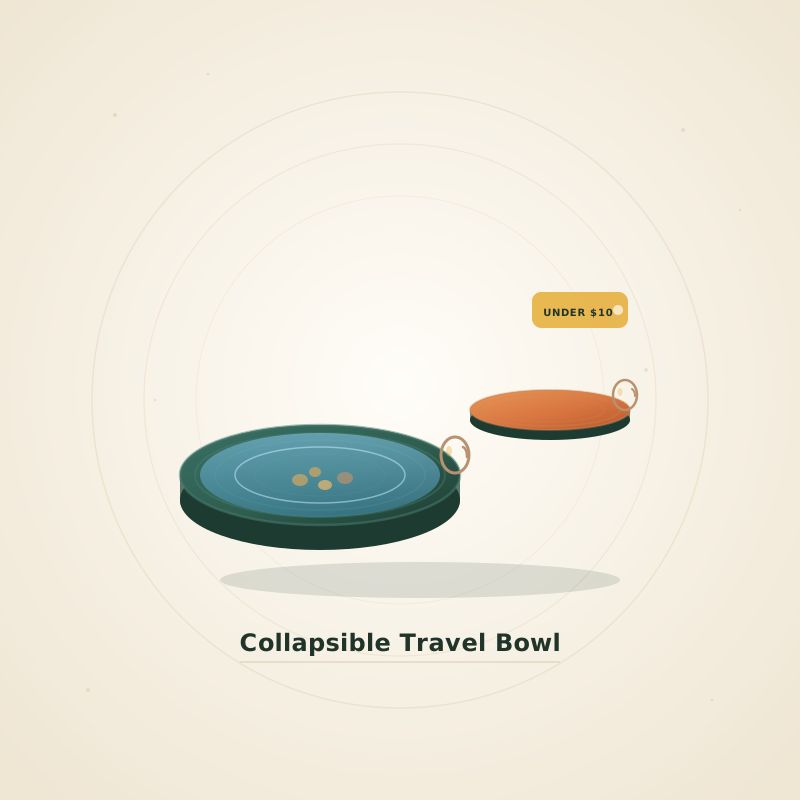
A collapsible travel water bowl earns its place in the door pocket here. At every stop, clip the leash on before you open the door, walk the dog to a shaded patch, and offer water, a few ounces, not a swimming pool, so you're not triggering a bathroom emergency 20 minutes later. Bring water from home or a sealed jug; strange tap water and roadside puddles are a fast track to an upset stomach on a day you really don't want one.
Keep feeding light and on schedule. A big meal plus a winding road equals vomit. Small portions, lots of water, frequent short walks to stretch and toilet.
The packing list: print this
- Restraint: crash-tested harness or a back-seat hammock, plus a leash you attach before any door opens.
- Water: bottled/jugged water from home, a collapsible bowl, and a spill towel.
- Food: their normal food measured per meal (don't switch food on a trip), a few familiar treats, and any medications in a labeled bag.
- Comfort: a blanket or bed that smells like home, one favorite toy, and a long-lasting chew for the drive.
- Cleanup: poop bags, paper towels, enzyme wipes, and a spare towel for muddy paws or accidents.
- Health & paperwork: a basic pet first-aid kit, vaccination records, and your vet's phone number saved in your phone.
- Identification: a collar with a current ID tag, and a tracker, covered next.
If your dog gets loose, ID is everything
The single highest-stakes moment of any road trip is the rest stop. A dog in unfamiliar territory, spooked by a truck horn or another dog, can slip a collar and be gone in seconds, and unlike at home, they have no idea which way is back. A microchip is essential but passive: it only helps once someone catches your dog and gets to a scanner.
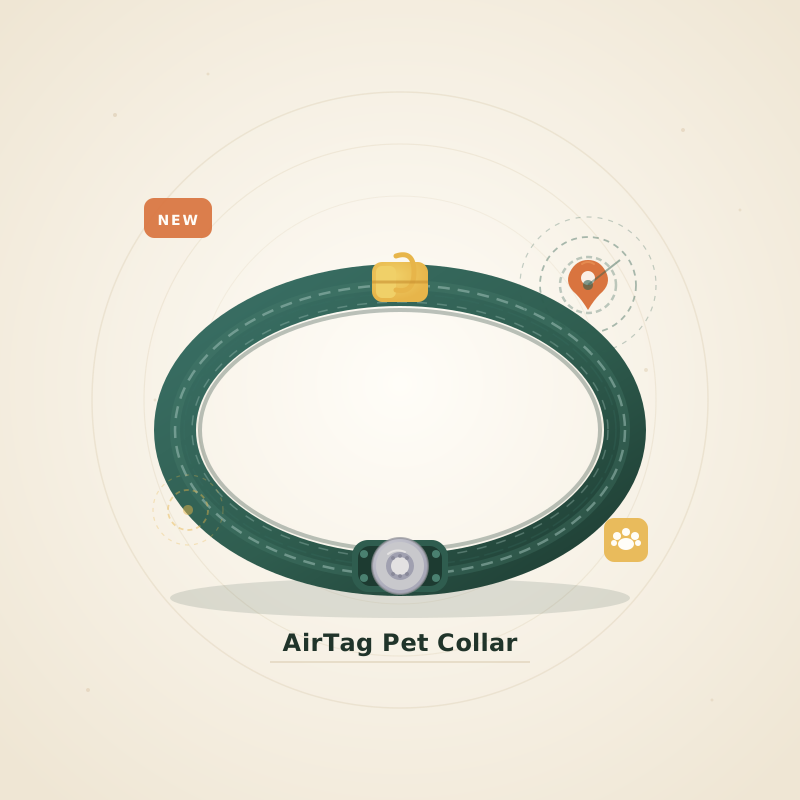
For real-time location, an AirTag collar closes the gap. Slot an Apple AirTag in, and if your dog bolts you can see roughly where they are on your phone instead of running blind through a parking lot. It's not GPS-precise and it leans on nearby iPhones in Apple's Find My network, so it's strongest near towns and highways and weaker deep in the backcountry, but a highway rest stop is exactly where it shines. Always run it alongside, never instead of, a physical ID tag and a registered microchip. Belt and suspenders is the right instinct when it's your dog.
Set the rhythm and the trip runs itself
Once the gear's sorted, the drive is just a rhythm: secure the dog before you pull out, stop every 2-3 hours, leash-water-walk at every stop, keep meals small, and never open a door without the leash already clipped. Build the car into a calm, familiar space (hammock down, blanket in, a chew for the miles), and most dogs settle within the first hour and sleep the rest.
Do the boring safety steps and you free yourself up to enjoy the actual point of it: your dog's head out the cracked window, ears flapping, on the way somewhere new. Pack smart, restrain properly, and have a plan for the worst, and a road trip with your dog becomes the easy, repeatable kind of adventure you'll keep doing for years.
A quick note: This guide is general pet-care information, not veterinary advice. Every animal is different: if your pet is in distress or you're unsure, call your vet or an emergency animal hospital.