Feeding & Enrichment
How to Teach Your Dog to Use Talking Buttons (Beginner's Step-by-Step)
By the wagmello team 8 min read
You've seen the videos: a dog walks over to a row of buttons, presses one, and a recorded voice says "outside," then waits at the door. It looks like magic, but it isn't. Teaching a dog to use talking buttons is built on the same association learning that powers "sit" and "shake," just pointed at communication instead of tricks. With a few minutes a day and some patience, most dogs can learn to press a button to ask for something they actually want. Here's exactly how to start.
How talking buttons work
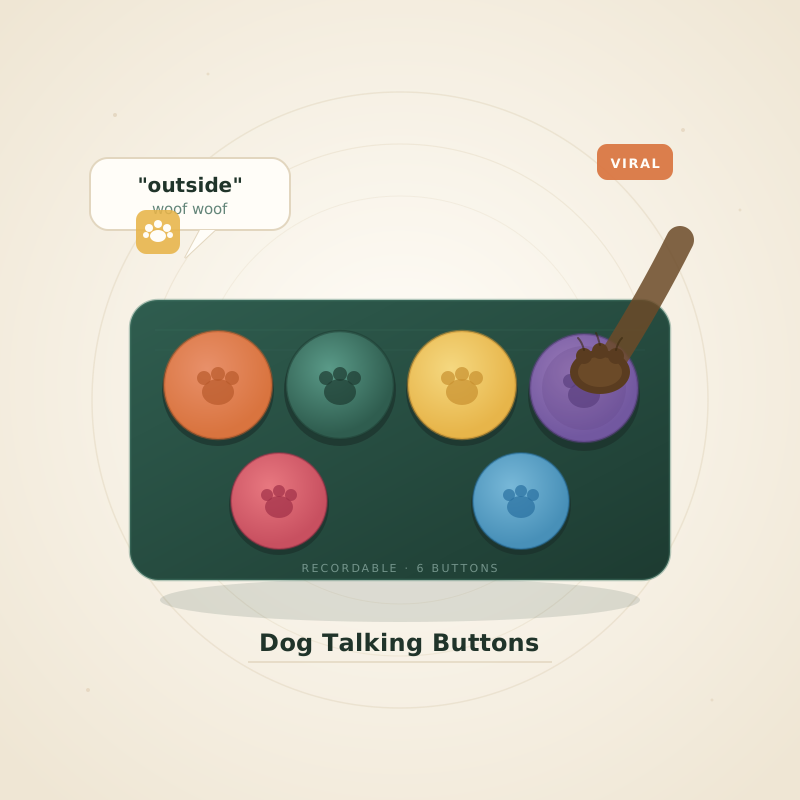
Each button records a single word in your own voice. The dog learns that pressing a specific button reliably produces a specific outcome. This is a simplified version of AAC, augmentative and alternative communication, the same category of tools used to help non-verbal humans communicate. Dogs don't understand grammar, but they're very good at learning "this action → this result," which is all a starter vocabulary needs.
You don't need a 30-button board to begin. In fact you shouldn't. A recordable talking-button starter set with a handful of buttons is the right entry point: start small, build only when your dog is ready.
Choose your first word carefully
The best first word is something your dog already wants badly and that happens many times a day, so you get lots of natural reps. Great starters:
- "Outside", paired with every potty trip and walk
- "Play", pressed right before a favorite game
- "Food", at meal times (use carefully; some dogs will spam it)
- "Outside" is the most popular first word because the payoff is obvious and frequent
Avoid abstract words ("love," "happy") at the start. There's nothing concrete for the dog to associate them with. Concrete, high-value, frequent. That's the formula.
The step-by-step training routine
Step 1: Record and place the button
Record the word clearly in your normal voice. Place the button in a consistent, meaningful spot: "outside" goes by the door you actually use. Consistency of location matters as much as the word itself.
Step 2: Model the button every single time
This is the part people skip, and it's the part that works. You press the button and say the word every time the action happens. Heading out? Press "outside," say "outside," then open the door. About to play fetch? Press "play," say "play," then throw the toy. You are showing the dog the cause and effect by doing it yourself, over and over.
Step 3: Build the association with repetition
Do this consistently for one to two weeks. Don't pressure the dog to press it yet, just keep modeling. You're laying down the pattern. Most dogs start watching the button with interest before they ever touch it.
Step 4: Encourage the first independent press
Once the pattern is established, pause at the moment your dog clearly wants the thing. Standing at the door, vibrating with excitement? Wait a beat and look at the button. Many dogs will investigate it: a nose bump or paw counts. The instant they press it, react with genuine enthusiasm and deliver the result immediately. That first "it worked!" moment is the breakthrough.
Step 5: Honor every press, then expand
In the early days, respond to every legitimate press, even at inconvenient times. The dog is testing whether the button is real. Once one word is solid, add a second, then a third. A 6- or 12-button set with a mat keeps a growing vocabulary organized and anchored in place on the floor so buttons don't slide around.
How long does it take?
Every dog is different, but a realistic timeline looks like this:
- Week 1-2: you model consistently; the dog observes
- Week 2-4: first intentional presses on the starter word
- Month 2+: reliable use of one word, ready to add more
Some dogs surprise you in days; others take a couple of months. Both are completely normal. The single biggest predictor of success isn't the dog's breed or intelligence: it's how consistently the human models the buttons.
Common mistakes to avoid
- Starting with too many buttons. One word, mastered, beats six words, confused.
- Forgetting to model. If you don't press it, the dog has nothing to copy.
- Ignoring presses. An unanswered button teaches the dog it doesn't work.
- Moving the buttons around. Location is part of the word for a dog.
- Quitting at two weeks. The magic usually lives just past the point most people give up.
Beyond buttons: keep that brain busy
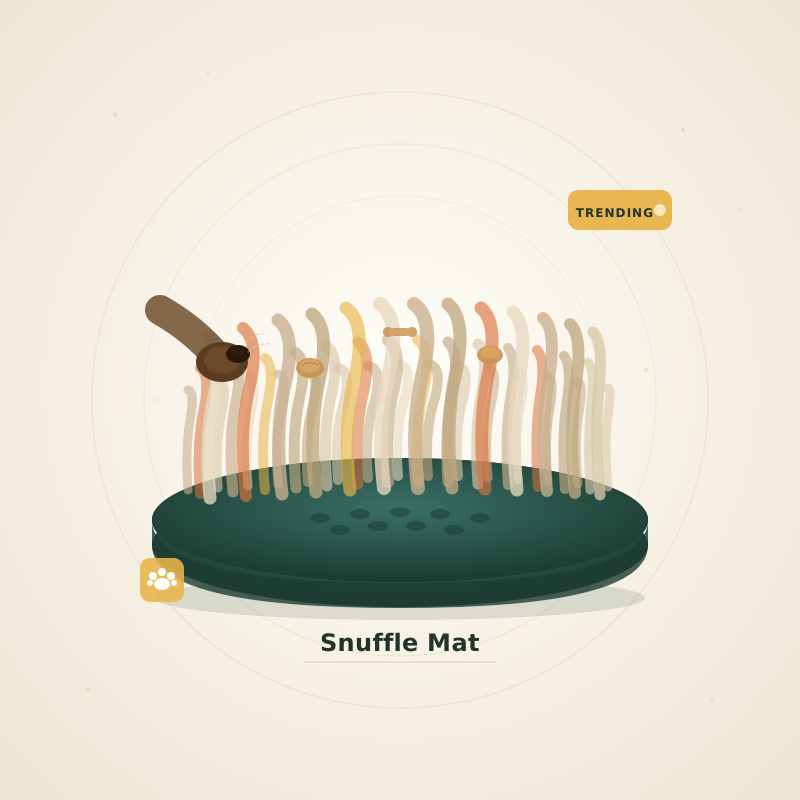
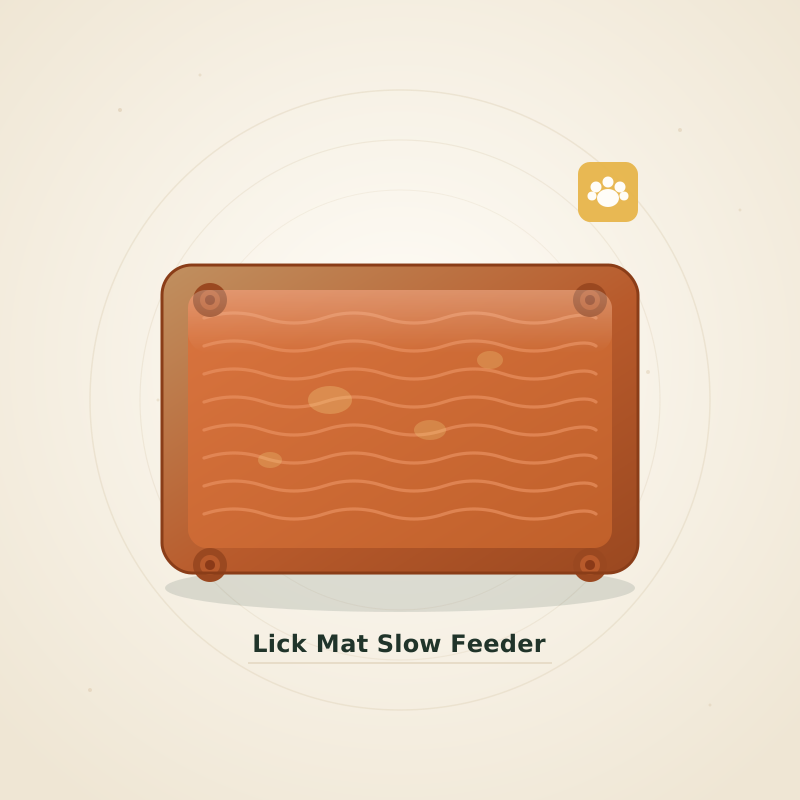
Button training works best with a dog whose mind is engaged in general. Pairing it with other enrichment, a snuffle mat for foraging or a lick mat to wind down, builds the kind of curious, problem-solving mindset that makes a dog a faster learner across the board. A mentally satisfied dog communicates more, not less.
Start with one button and one word today. Model it every time. In a few weeks you may hear your dog ask for the thing they want, in your own voice. The starter set below is the cheapest way to find out what your dog has to say.
A quick note: This guide is general pet-care information, not veterinary advice. Every animal is different: if your pet is in distress or you're unsure, call your vet or an emergency animal hospital.