feeding-enrichment
Dog Eats Too Fast? Why It’s Dangerous and How to Slow Them Down
By the wagmello team 6 min read
You put the bowl down, turn around to grab a paper towel, and by the time you look back it's empty. If your dog eats too fast, you already know the routine: the gulping, the half-swallowed kibble, the occasional puddle of regurgitated food thirty seconds later. It's easy to laugh off as enthusiasm. But speed-eating is one of those habits that sits quietly in "harmless" territory right up until the night it isn't.
Here's the honest version, informed by what veterinarians actually warn about: eating too fast is genuinely risky, the worst outcome is an emergency, and slowing your dog down is one of the cheapest, most effective things you can do for them. Let's break down why it happens, what it can lead to, and exactly how to fix it.
Why some dogs inhale their food
Dogs aren't built like us. They evolved as opportunistic eaters whose ancestors competed in groups: the one who ate fastest got the most. That instinct is still wired in. So a dog who scarfs isn't being "bad," they're running an ancient program that says finish before someone takes it.
A few things turn the volume up on that instinct:
- Multi-pet households. If there's any history of competing for food (even a sibling who once stole a bite), a dog learns to eat defensively and fast.
- Early life scarcity. Rescues, former strays, and dogs from large litters often carry food anxiety for years.
- Boredom and routine. When the bowl is the most exciting thing that happens all day, dogs attack it. The meal is over in seconds because there's nothing to slow them down.
- Highly palatable food. Rich, smelly food triggers faster eating in almost every dog.
Why it's actually dangerous
This is the part people underestimate. Fast eating isn't just messy. It's tied to several real medical problems.
Choking and aspiration
A dog gulping kibble without chewing can lodge a piece in the airway. Brachycephalic breeds (pugs, bulldogs, frenchies) are especially at risk because of their short airways. Worse, food inhaled into the lungs instead of the stomach can cause aspiration pneumonia.
Vomiting and regurgitation
That post-meal puddle isn't normal. When a dog swallows food and a lot of air too quickly, the stomach rebels and the food comes right back up, often whole, often within a minute. Beyond being unpleasant, it means your dog isn't actually digesting the meal they just ate.
Bloat: the one that can kill
The serious one is gastric dilatation-volvulus (GDV), commonly called bloat. When a dog eats fast, they swallow excess air along with food. The stomach distends with gas, and in the dangerous form, it twists on itself, cutting off blood supply and trapping everything inside. GDV is a true emergency: it can become fatal within a couple of hours, and it requires immediate surgery. Large, deep-chested breeds (Great Danes, German Shepherds, Standard Poodles, Weimaraners, Setters) are at highest risk, but it can happen to any dog. Eating quickly from a raised bowl, then drinking a lot of water and running around, is a textbook setup for it.
Vets consistently list "eating too fast" and "eating one large meal a day" among the modifiable risk factors for bloat. You can't change your dog's chest shape, but you can absolutely change how fast they eat. If you ever see a distended belly, unproductive retching, drooling, restlessness, and a dog who seems to be in distress, treat it as an emergency and get to a vet immediately.
How to slow your dog down
The good news: this is a very solvable problem, and most fixes cost less than one vet visit. Here are the approaches that actually work, roughly in order of how reliably they help.
1. Turn the meal into a foraging puzzle
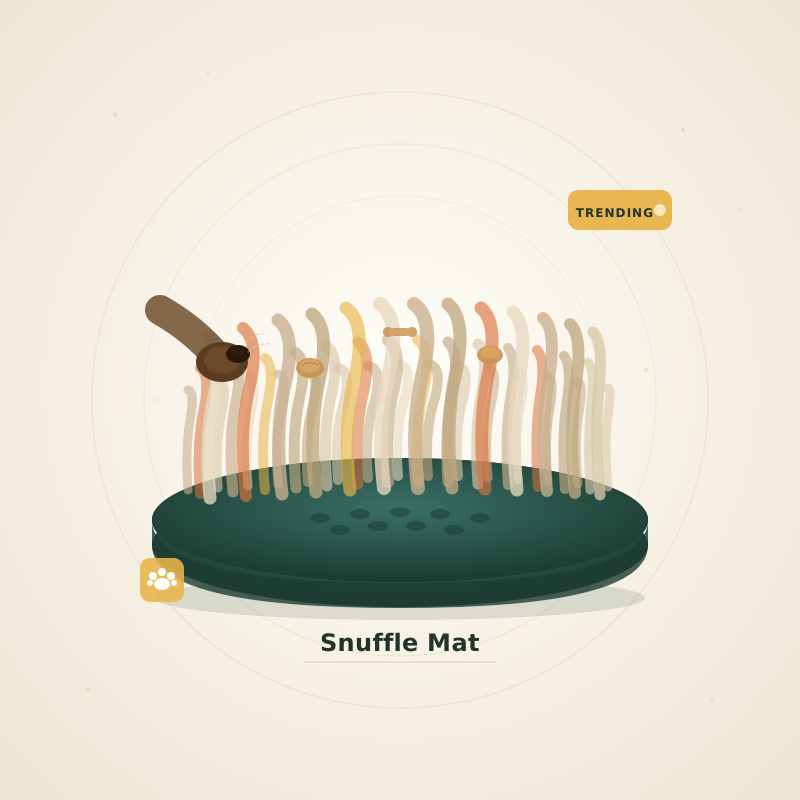
The most effective single change is to stop serving food in a bowl at all. Dogs are scent hunters, and a bowl gone in 90 seconds gives that instinct nothing to do. A snuffle mat hides kibble down in fabric tendrils so your dog has to sniff it out piece by piece. A meal that used to vanish in under a minute stretches to ten or fifteen, and your dog finishes mentally tired instead of wired. As a bonus, nose-work burns surprising amounts of mental energy, roughly the equivalent of a decent walk, which helps with the boredom that drives fast eating in the first place. It's also fully washable, so a kibble-and-wet-food meal isn't a problem.
2. Use a slow feeder or lick mat for wet food
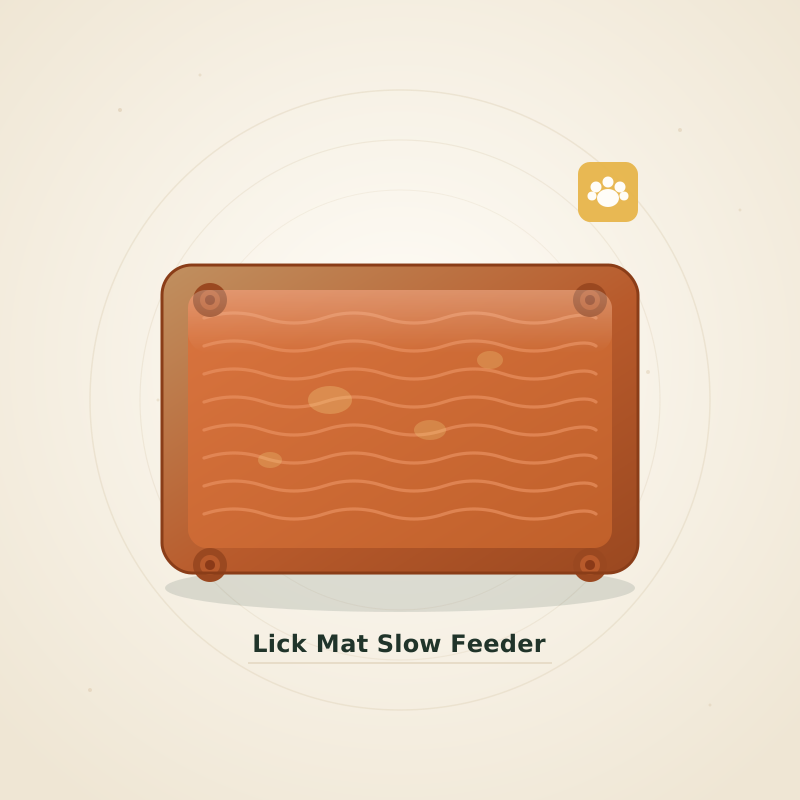
For soft food, wet food, or any dog you want to slow without the cleanup of scattered kibble, a textured lick mat is excellent. You spread the food across the ridged surface and your dog has to lick it out of the grooves, which physically paces the meal. There's a second benefit here: rhythmic licking triggers a calming, parasympathetic response in dogs and measurably lowers cortisol. So for an anxious eater (the dog who scarfs because they're stressed), you're addressing the speed and the underlying anxiety at the same time. Smear xylitol-free peanut butter, plain Greek yogurt, pureed pumpkin, or their wet food across it.
3. Feed smaller meals more often
Two or three smaller meals a day instead of one big one reduces the volume hitting the stomach at once, directly lowering bloat risk. A hungry dog facing a mountain of food eats faster; a dog fed twice a day with a sane portion has less reason to panic.
4. The muffin-tin and scatter tricks
No special gear? Spread kibble across a baking sheet, or portion it into a muffin tin so your dog works through one cup at a time. Outdoors, scatter-feeding across the grass turns dinner into a hunt. These are free stopgaps, though purpose-made mats hold up better day to day.
5. Separate dogs at mealtime
In a multi-dog home, feed in different rooms or behind a gate. Removing the perceived competition often slows a defensive eater dramatically on its own.
6. Skip the post-meal sprint
Whatever you feed with, keep things calm for 30-60 minutes after eating. No vigorous play, no zoomies, no long-distance fetch right after a full meal: that combination of a full, air-filled stomach plus motion is exactly what you're trying to avoid.
The bottom line
A dog that eats too fast is telling you something: about instinct, about anxiety, sometimes about a real medical risk hiding behind a funny habit. You don't need to medicate it or out-train it. You mostly need to make the food harder to get, which slows the eating, engages the brain, and quietly removes one of the few risk factors for bloat you can actually control. A snuffle mat for kibble and a lick mat for soft food cover almost every dog and every meal between them. Start there, watch a 60-second inhale stretch into a relaxed fifteen minutes, and you've turned the riskiest part of your dog's day into the best part of it.
A quick note: This guide is general pet-care information, not veterinary advice. Every animal is different: if your pet is in distress or you're unsure, call your vet or an emergency animal hospital.