feeding-enrichment
Bored Dog, Chewed Couch: How to Stop Destructive Boredom for Good
By the wagmello team 7 min read
You came home to stuffing on the floor, a table leg gnawed to splinters, or a baseboard that looks like a beaver got to it. Before you label your dog "naughty," understand this: a chewed couch is almost never a behavior problem. It's an unmet-needs problem. Destructive chewing, digging, and shredding are what a bored, under-stimulated dog does with the energy it has nowhere else to put.
The good news is that learning how to stop dog boredom is genuinely fixable, and it usually costs far less than reupholstering your sofa. This guide walks through why it happens and exactly what to do about it.
Why bored dogs get destructive
Dogs are built to work for their food and use their brains. For thousands of years they hunted, foraged, herded, and scavenged, activities that filled hours of every day. The modern dog gets its food dropped into a bowl in nine seconds flat, then has fourteen empty hours to fill. That gap is where the trouble starts.
When a dog has surplus physical and mental energy, it self-soothes and self-entertains the only ways it knows how: chewing, digging, barking, and shredding. Chewing in particular releases endorphins, so a stressed or under-stimulated dog literally feels better while it's destroying your shoe. You're not fighting spite. You're fighting biology.
A few common drivers worth ruling out:
- Under-exercise: a daily walk that's too short or too predictable.
- Zero mental stimulation: physical tiredness alone doesn't satisfy the brain. A dog can be exhausted and still bored.
- Separation-related distress: destruction concentrated around your departures (often paired with pacing, drooling, or vocalizing) points to anxiety, not boredom, and may need a behaviorist.
- Teething: puppies under about seven months chew because their mouths hurt.
For the large majority of cases, the dog who's fine when you're home but wrecks things when under-occupied, the fix is enrichment. Here's the plan.
Step 1: Make mealtime a job, not a handout
The single highest-leverage change you can make is to stop feeding from a bowl. A bowl meal is over in seconds and asks nothing of your dog. Turn that same food into a foraging task and you convert a 9-second event into a 15- to 30-minute brain workout.
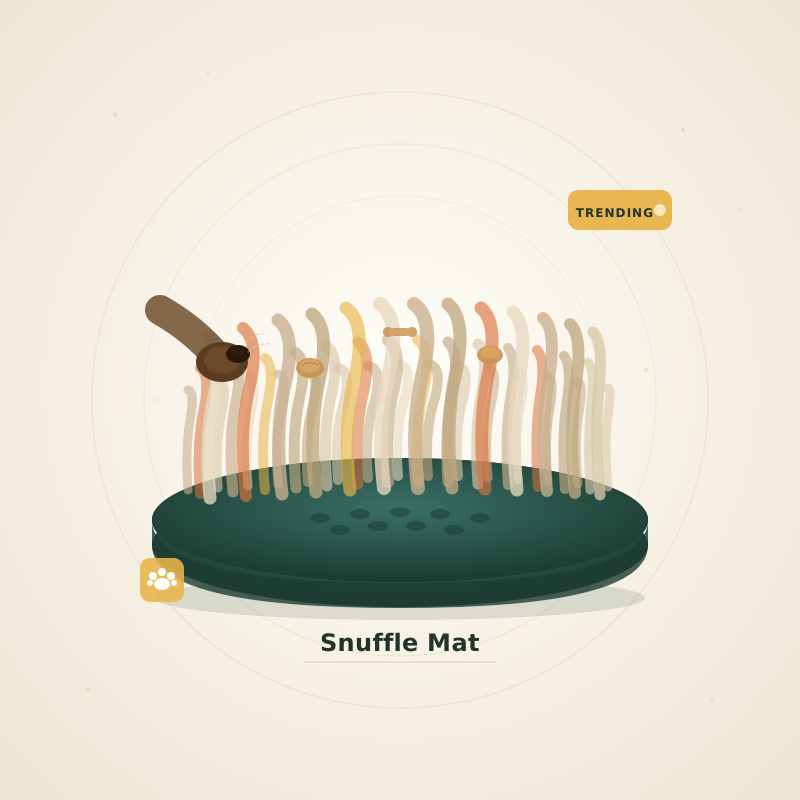
This is where a snuffle mat for nose-work feeding earns its keep. You scatter your dog's kibble (or treats) deep into its fabric fingers, and your dog has to sniff, nudge, and root each piece out. Sniffing is mentally taxing in a way running never is: scent processing occupies a huge portion of a dog's brain, and that focused searching produces the kind of satisfied, settled tiredness that prevents destructive behavior. It's the difference between burning energy and actually satisfying the instinct that drives the chewing.
Feed at least one meal a day this way and you've removed a chunk of empty afternoon while giving your dog a legitimate outlet for its foraging drive.
Step 2: Redirect the chewing itself
Chewing is a need, not a vice. The goal isn't to eliminate it: it's to give it a legal target so your dog stops auditioning your furniture for the role.
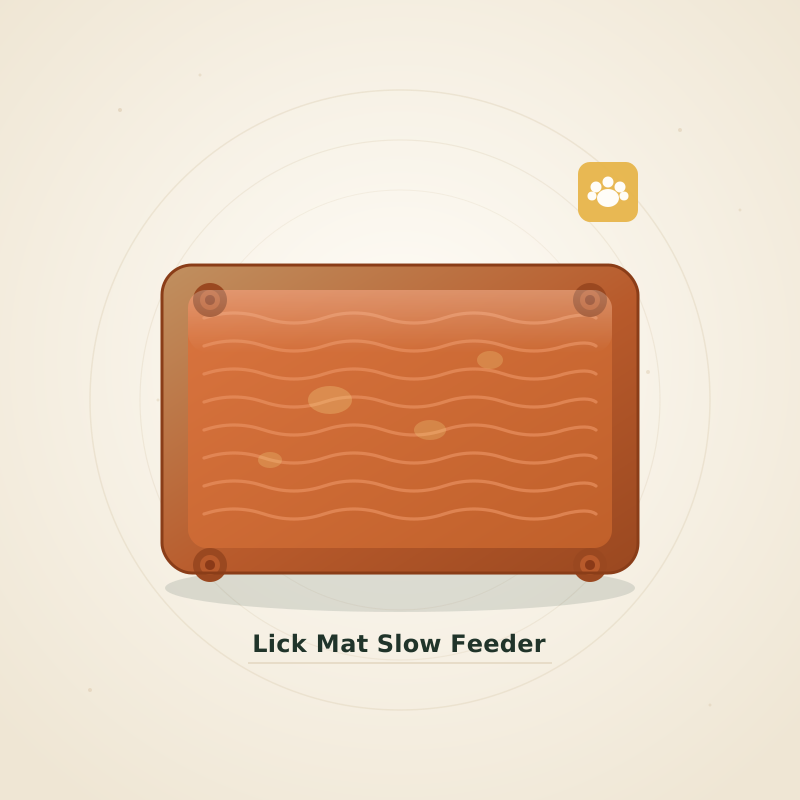
A lick mat for calm, focused chewing is one of the most underrated tools for this. You smear it with something safe and tasty, plain unsweetened yogurt, a little wet food, mashed banana, or dog-safe peanut butter (xylitol-free, always), and freeze it for an hour. The repetitive licking does two things at once: it occupies your dog for a long stretch, and the act of licking itself is self-calming. It lowers heart rate and triggers a relaxation response, which is exactly why it works so well at the moments dogs tend to get destructive, right after you leave, or during the restless early evening.
Rotate in appropriate chew items too, and pick up the tempting illegal targets. Bitter anti-chew sprays on furniture legs can help during the retraining window, but they only work alongside an attractive legal alternative.
Step 3: Upgrade the exercise (then add brain games)
Physical exercise still matters. It just isn't the whole answer. Aim for movement that's varied and engaging rather than the same loop every day. Let your dog sniff on walks (a "sniffari" where the dog sets the pace is more tiring than a brisk march), add some fetch or tug, and if your breed needs more, look into flirt poles or local dog sports.
Then layer in five-minute brain games throughout the day. Short training sessions teaching a new trick, simple "find it" searches around the house, and food puzzles all drain mental energy. A few minutes of training can tire a dog more than a half-hour walk. The principle to remember: a tired brain is a calm dog, and a calm dog leaves the couch alone.
Step 4: Build a daily rhythm
Enrichment works best as a routine, not a rescue. A workable day might look like: morning sniffy walk, breakfast fed through a snuffle mat, a frozen lick mat right as you head out the door, a midday chew, a short training session when you're back, and an evening play session. None of it is time-consuming once it's habit: most of it replaces things you were already doing (like dumping a bowl) with slightly better versions.
Crucially, give the calm activities at the moments your dog tends to fail. If the damage happens when you leave, the frozen lick mat should come out as you grab your keys: it builds a positive association with your departure instead of a panicky one.
When boredom isn't the whole story
If your dog destroys things only when home alone and shows real distress, nonstop barking, house-soiling in a trained dog, injuring itself trying to escape a crate or doorway, you may be dealing with separation anxiety rather than simple boredom. Enrichment still helps, but pair it with advice from your vet or a qualified behaviorist. Likewise, a sudden change in a previously well-behaved adult dog deserves a vet check to rule out pain or a medical cause.
The bottom line
Destructive boredom isn't a character flaw you have to punish out of your dog: it's a signal that your dog's brain and instincts aren't getting enough to do. Give the foraging drive an outlet with a snuffle mat, redirect the chewing onto a lick mat, vary the exercise, and sprinkle in brain games, and most "bad dog" problems quietly disappear within a couple of weeks. Your couch and your dog will both be a lot happier for it.
A quick note: This guide is general pet-care information, not veterinary advice. Every animal is different: if your pet is in distress or you're unsure, call your vet or an emergency animal hospital.